Thursday, 5 March 2015

Positive and Negative portrayals of Race, Ethnicity and Colour in the media.

Dear White People

Dear White People can be argued to be both a positive and negative representation on race and colour in the media.


Dear White People is a film made in 2014 about the stereotypes made of black people in America. As seen in Trailer One the group of black people are questioning a cinema employee as to why films shown only show "Black people dying in the past and black people dying in the present". The language the characters use and the slang are that of what is stereotyped to be used by black americans like at 00:40 - 00:47 when the group reacts to Two Chainz being in a film. This bring humour to the film as the film explores racial identity in acutely-not-post-racial America while weaving a universal story of forging ones unique path in the world. I think this film is a positive representation of race etc to an extent because of the comedy used and the blatant intent of stereotyping. I know this because I went and saw this film in cinema with a friend and being one of the five/six white people in the cinema i noticed that the films intent and stereotyping was seen as comical to everyone in the theatre thus proving its intent was not to be racist but to make fun of white people for stereotyping certain words or body gestures to black people not only in America but in England too.
In Trailer Two the first half shows a young girl speaking over a radio intercom with a show called 'Dear White People' and she lists off the different things that white people do that she deems racist. These include:
  1. "The minimum requirement of black friends in order to not look racist has been raised to two. Sorry but your weed man Tyrone doesn't count"
  2. "Touching guys affro is annoying. This isn't a petting zoo"
  3. "Dating a black guy to p*ss off your parents is a form of racism"
These assumptions and accusations can be seen as humorous as they're clearly intended to be humorous. The assumption that white people immediately touch a black persons affro is a stereotype as well s the stereotype of a persons dealer being black and called Tyrone.
There is also the quote "Black people can't be racist. Prejudice yes, but not racist. Racism describes a system of disadvantage based on race. Black people can't be racist since we don't stand to benefit from such a system."

Tuesday, 3 March 2015

Representation of Ethnicity

Rihanna, Kanye West & Paul McCartney
Rihanna is originally of Barbadian heritage and throughout her time as a music artist she has done practically every musical genre there is. Her most recent being 'FourFiveSeconds' which is "a pop and soul pop song with country and folk music influences and an instrumentation consisting of an acoustic guitar" as well as being described as "country-tinged" acoustic and "stripped down" pop and soul pop song with a folk feel".
This song was recorded alongside American Rapper Kanye West and English Musician Paul McCartney. Throughout the music video there is no colour used apart from black and white which plays on the ethnicity of each individual.
As well as ethnicity, there is a hint of sexualisation especially from Rihanna as she's seen to be wearing a large denims jacket done up with a belt giving quite a grunge appearance alongside Kanye who is wearing similar clothing. Rihanna's makeup is quite minimal compared to her make up in other music videos the same applies with her hair too which is hanging down put is pulled away from her face. 
Rihanna is sexualised but not completely through her body and through unity like most women in music videos are. She is sexualised through a more natural means as she looks quite simplistic and her clothing doesn't reveal music flesh the whole way through the music video and her clothes as well as flattering her don't actually give away Rihanna's figure thus making men believe her to be slim. With what she's wearing it would be unclear to tell if she were slim or not.
The whole music video kind of breaks the stereotypes of ethnicity because its not very often seen that  black/barbadian people engage in country/folk stylised music.

Tuesday, 10 February 2015

Camera Angles and Representation

Savage Grace

This shot is an establishing shot. This is known as an establishing shot as it confirms to an audience where the film or this particular scene is to be set and at what time of day too. An establishing shot is typically used at the beginning of a scene to establish the setting for said scene. In this sense we establish that the film is set in England and this particular scene is at night or dawn due to the low key lighting and the horizon having a sense of run rise or sun set die to the yellows and oranges. 

However this shot is known as a close up which usually depicts certain emotions on a character and shows them to the audience. In this shot we see the woman at a party seen by her dress (not in this shot in another one before she moved) and by her hair style and make up. We also get a sense of the time era as well as she is styled like people were in the 60's/70's.
As well as being a close up this was also a part of a Shot Reverse-Shot too. In which a shot in used likely during a conversation between two characters and the shot changes from one persons perspective, to the others, and then back again. This is effective as it shows both characters reactions within a conversation and their actions too.

Finally an example of a mid shot can be seen above as well as a shot using the rule of thirds. This shot not only views the two characters but also the scenery behind them indicating they're in public, again in a different time era due to their clothes and style. This is recognised as a mid shot because the shots has half their body in to about mid way. 
This uses the rule of thirds too as the characters are located in the last thirds of the screen and the first tow are filled with the background and the scenery. This is effective as its a change in the use of shots and can possibly make way for someone to appear within the left hand side of the screen. This also allows an audience to see the miss-en-scene of the background which - again - helps set a time era, a location and an idea of the time of day (day/night).

Tuesday, 3 February 2015

This Girl Can

This Girl Can

In the 'This Girl Can' video women are completely breaking out of the presumed stereotype. This is done through the use of women of all shapes, ages, assizes being used within the video. All of which are exercising and having fun whilst doing so, this is sending a message to the audience that women are breaking out of their stereotypes and are comfortable in their own bodies. Something that everyone should feel.
The advert constantly shows signs of encouragement for women such as 'I jiggle, therefore I can', 'Feeling like a fox', and 'Damn right I look hot'. These messages encourage women as it makes women feel as though they are good enough no matter how they look and that they can exe rice for their health or just because they find it fun.
Different ages are used within the advert too, this widens the target audience from teenage girls to older women. The use of this not only widens the target audience for marketing value but to spread the message across a wider audience. As a teenage girl, body image becomes very important and this carries on throughout your life, when women get older however it sometimes becomes less so as there are other priorities, the video encourages women to take back their body image.
The 'This Girl Can' video shows women that they can look good no matter if they're fat, thin, older or younger and regardless of how they're clothed. This is seen through the use of a women who is bigger wearing a bikini and still being encouraged to look good, as well as people running in shorts when some may depict it unattractive for them to wear such clothing due to size or age.
There is also an array of different sports used to prove that no matter what you're doing (sport wise) women still look good doing it. The 'This Girl Can' video encourages this emmensly.

Thursday, 11 December 2014

Representation of Age - Exam Prep

Find 3 specific examples of the representation of age in the media from a variety of contemporary texts (these must be from the last 2 years)

Advert (include year of advert)\

SMA Advert - 2013

This represents the age of children. There are eight main stereotype categories for children.

  1. As victims of horrendous crimes - Some critics of the media have suggested that While children who are victims of crime get more media attention than adults or children from ethnic minority backgrounds.
  2. As cute - This is a common stereotype found in television commercials for baby products or toilet rolls.
  3. As little devils - another common stereotype especially found in drama and comedy,  e.g. Bart Simpson.
  4. As brilliant - Perhaps as child prodigies or as heroes for saving the life of an adult.
  5. As brave little angels - suffering from a long-term terminal disease or disability.
  6. As accessories - stories about celebrities such as Madonna, Angelina Jolie or the Beckham's may focus on how their children humanise them.
  7. As modern - the media may focus on how children 'these days' know so much more 'at their age' than previous generations of children.
  8. As active consumers - television commercials portray children as having a consumer appetite fro toys and games. Some family sociologists note that this has led to the emergence of a new family pressure, 'pester power', the power of children to train or manipulate their parents to spend money on consumer good that will increase the children's status in the eyes of their peers.
This advert portrays children as 'cute' as they're babies ad though they're acting naughty they're still cute to watch and the advert makes people - parents especially - smile or laugh.

Music Videos (pick a particular scene, exact times should be noted)

Break the Rules - Charli XCX

In the first five seconds of the music video we hear the non diegetic sound of a school bell ringing followed by a group of teenagers running down a corridor that's set to look like one you would find in a high school. The students are wearing a typical school uniform including white shirts and black trousers or a black skirt. Some of the students are carrying school folders or books. This all links in with the name of the song 'Break the Rules' as schools have several rules that students usually enjoy breaking. The use of teenagers also immediately gives you a sense of who the central target audience is for the song. This being young adults/teenagers (14-18), presumably females as its a female singer.
When the musics soundtrack begins the camera loses focus of the students running by and focus's solely on Charli and some girls behind her. They're not dressed the same as everyone else indicating they're already 'breaking the rules' by wearing provocative alternates to the school uniform. They're edited to be in a slight slower motion than the previous action to draw attention to Charli and what she's doing and wearing. The girls she is with are all very pretty too which along with Charli appeals to 'The Male Gaze Theory' and thus engages a target audience of males as well as females.
At 00:14 the setting changes to an American football ground's bleachers, the colour's being yellow and dark blue, the blue matching the skirt Charli is wearing and the jacket one of the other girls wears. The weather is also incredibly sunny and bright portraying the song is happy rather than sad. Due to the weather the lighting is soft and high-ish key rather than low key which would give the whole music video a depressing tone.
The scene changes again at 00:17 to only Charli stood on top of an American school bus, its also yellow thus linking into the yellow we saw earlier on the bleachers. The bus appears to also be on the football field with the bleachers in the back ground. The shot on Charli is an establishing/long shot of her and her whereabouts. The fact that Charli is on top of a school bus also links into the songs message of 'breaking the rules'. The she is stood on top of the bus she is wearing a black leather jacket, short shorts that show a bit of bum cheek, there are tassels coming from either her jacket of shorts too that cover part her legs but due to the movement don't keep covering them and sun glasses. Typically fitting the stereotype of a 'bad girl' almost linking to the stereotype of a 'biker chick'.
When Charli and her 'girls' enter the school bus (00:29) the bus driver looks the complete opposite of a bus driver as he has long dark curly hear, a baseball cap and headphones. He looks almost 'grungy' in his appearance and king of like a 'rocker' rather than a bus driver. Once on the bus (which only contains Charli and the girls) they all walk to the back half of the bus, something typically done by the 'bad' kids in a class. None of the girls are sat still, all are dancing or chatting or interacting with Charli who is singing directly to the camera, the shot used in this scene is a mid shot with occasional close ups of Charli herself singing. At 00:47 the girls and Charli begin to throw ripped up paper at each other and the camera indicating they're having fun and are once again breaking rules by making a mess and also ripping up paper as well as standing on the bus seats.
At 00:54 the camera is at a low angle watching at the bus drives past with Charli and the girls all hanging out the windows waving and throwing notebooks and paper towards the camera. For a second the camera closes up on Charli to show her having fun and initially looking like the ring leader of the girls and their behaviour.
Throughout he first minute of the music video the scenes switch from Charli dancing and strutting around on top of the bus, to Charli in the bus singing to the camera or having fun with her friends, or hanging out the bus presumably shouting or laughing; though this isn't heard due to the soundtrack playing but you see the action and intention of laughing or screaming.
After the school bell at the beginning of the music video no other sounds are used other than the soundtrack with Charli singing.


Film Trailers (Pick a particular Scene, exact times should be noted)

Nativity 2: Danger in the Manger - 2012

This is an film trailer specifically aimed at the audience of young children at Christmastime. We know it's aimed at young children because the film - as seen from the trailer - mainly includes primary school aged children.
In the first 10 seconds of the trailer the film misleads an audience to believe that the film is aimed at all ages at Christmastime but then as the trailer progresses we discover that the film is aimed more at a young audience in Primary Schools as the children in the film are all Primary School students as seen from 00:11 - 00:14. At 00:25 to 00:30 we see the teachers assistant 'Mr Poppy' encouraging the children to chase their new teacher around the playground. Something that can be seen as humorous to a young audience as every child would enjoy chasing and scaring their teacher with permission.
Mr Poppy is arguably a child himself despite being an adult as he goes against the Headmasters wishes and holds 'secret auditions' for the Christmas competition 'Song for Christmas' (00:38 - 00:49). This adds to the aspired audience of young children because Mr Poppy isn't like a normal teachers assistant and he encourages the children to do 'mad' and 'absurd' things that would never be done in a normal primary school.
We see more of the shenanigans encouraged by Mr Poppy from 00:58 - 1:11 in which he sneaks the children out the school and into a decorated vehicle, ties up the teacher Mr Peterson and drives across the country to Wales without the head teacher realising immediately and again at 1:15 - 1:20 when he gets into a fight with a rival schools teacher.
At 1:35 - 1:54 we hear the children's Christmas song and various scenes from the Song for Christmas competition and a funny clip of Mr Poppy and Mr Peterson changing a babies nappy.
This is a film blatantly aimed at children in Primary School and younger or young families due to the children in the cast being of that age group too. Though this is the primary audience, there is a secondary audience of other age ranges including young adults and people who enjoy Christmas.


Tuesday, 4 November 2014

Ideas for Film Poster - Coursework

Ideas for Film Poster

  Has to be...

  • Romantic Comedy
  • 16-20 FEMALES
  • Bright & Attractive Colours
  • 'Dramatic' - To an extent

Ideas...

  • Rather than a boy and a girl, I like the idea of doing two girls on the front or the same person twice like 'The Parent Trap' or 'She's the Man'. Simply because it's different and wouldn't require more than two people.


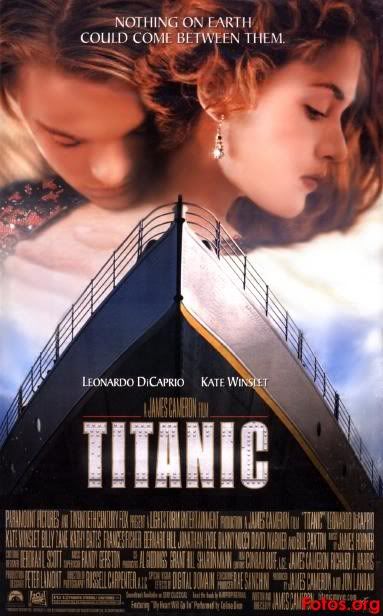
  • I also like posters that have a transition from one image to another like 'The Last Song' or 'Titanic'. This has a good effect to it and would again, be different.


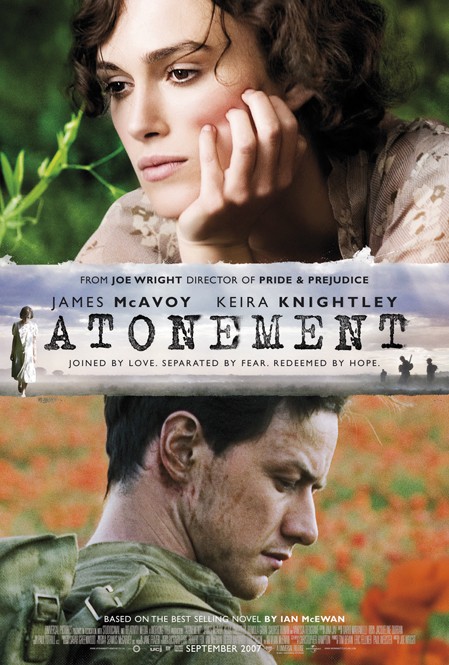
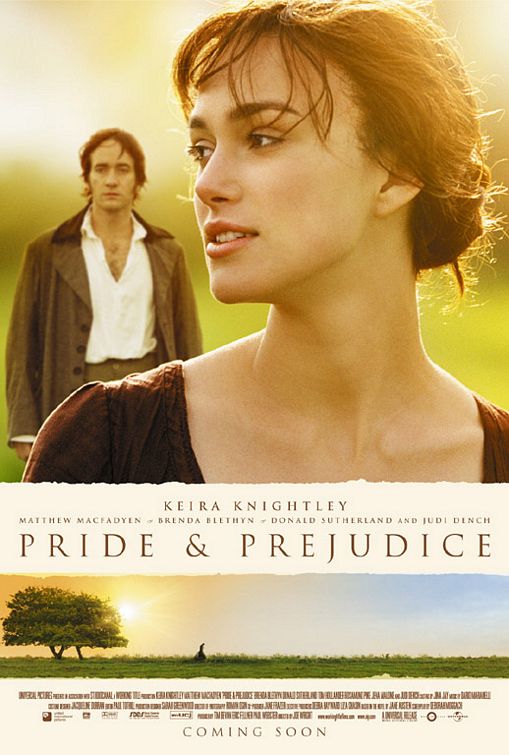
  • One image - Title - Another Image. 'Atonement' or 'Pride and Prejudice'. This means I don't need to have the two cast members together in a photo so I can use them separately.

Film Poster - Final Survey Conclusions - Coursework

After looking at my survey's responses i have discovered that my target audience is mainly going to be based around the age range of 16-20 year olds. For me personally this as easier as i'm in this age category and therefore can base the film poster partially on what i would want to watch in a film or see on a film poster. It has also became evident that my target audience consists mainly of females - amongst these females, six were 16-20 years old. Due to this I will also use a 16-20 year old on my film poster to attract the age group and to target this age group. 
The top voted film genres I had were Romantic Comedy and a Horror or Thriller, each getting six votes. Due to this i had to then look back into which had the most female votes as females were my target audience. This was Romantic Comedy. 
My film poster was also voted to include 'Bright, Attractive Colours', and 'Certain actors in the Films' - unfortunately I couldn't put certain actors in my film poster so i've decided to use the third highest voted option which was 'Dramatic Photo's of the Cast'. Upon discovering this information I've decided to use a single person on my film poster and base the film poster to them, using the rule of thirds and photoshop I will make my poster 'Bright and Attractive' but also 'Dramatic'. 
I also asked if people pay attention to reviews found on film posters, the main response was 'Sometimes' and my second highest voted option was 'Yes'. I therefore will be including some kind of review on my film poster, it's also an idea to put on award badges (for example BAFTA or Emmys etc) as it makes film posters look more distinguished and seeing a film award logo is more likely to draw attention to a film poster and make it look more appealing it the film itself is supposedly good. 
For the 'market research' for my double page spread i asked if people bought and read film magazines to which i got a staggering amount of no's - although the most voted option was 'No' I am still going to write a double page spread but I will use the additional information i discovered to make my double page spread appealing to read. I found out people tend to follow film trailers on Youtube which is something else i can write about in my double page spread that will also help draw in readers.
My survey results also mentioned - like before - the appeal of dramatic photos of the cast so in my doubt page spread I will be using photos of my 'model' to add this appeal.
Overall for my Romantic Comedy film poster my target audience are 16-20 year old females. My film poster will include bright, attractive colours and dramatic photos of the my model as well as these aspects being used in my double page spread.